Vinayaka Vratham 2026: Rules, Fasting & Sankalpam
A traditional guide for observing the sacred Vinayaka Vratham on Ganesh Chaturthi with devotion, traditional fasting practices, and regional customs.
Vinayaka Vratham is traditionally observed on Vinayaka Chavithi, which falls on Monday, September 14, 2026. Devotees may observe fasting, Sankalpam, Ganesh Puja, Shodashopachara, Naivedyam, Aarti and the Vinayaka Vratha Katha according to their family and regional traditions.
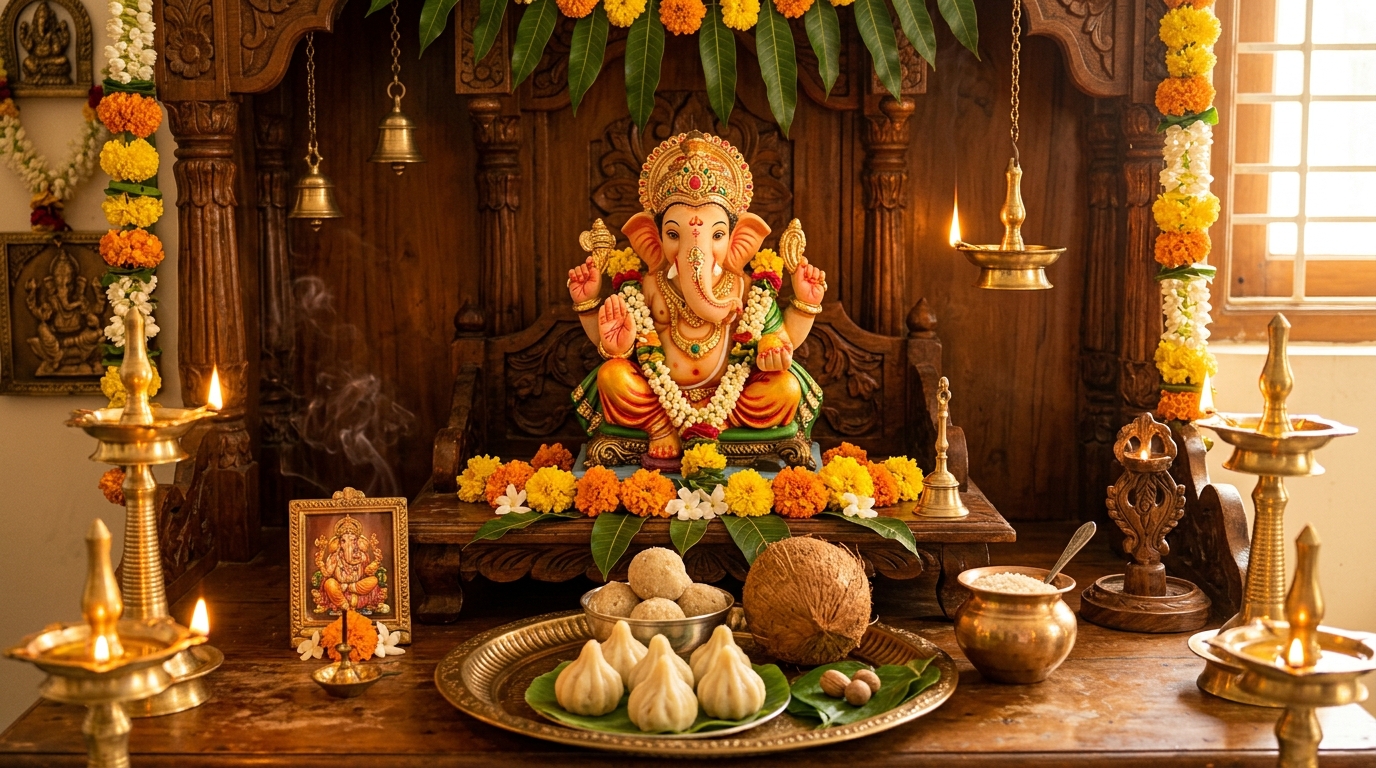
VRATHAM AT A GLANCE (వ్రత క్రమం)
The sacred Vinayaka Vratham traditionally encompasses the following sequential stages:
Purification
స్నానం & మండపం (Morning bath & altar setup)Sankalpam
సంకల్పం (Sacred pledge & prayer intent)Ganesh Puja
పసుపు గణపతి పూజ (Turmeric Ganesha worship)Shodashopachara
16 ఉపచారాలు & పత్రి (16 rituals & 21 sacred leaves)Naivedyam
నైవేద్య సమర్పణ (Undrallu & sweet offerings)Aarti
మంగళ హారతి (Camphor flame waving)Vratha Katha
శమంతకోపాఖ్యానం (Sacred story recitation)Prasad / Completion
ప్రసాద స్వీకరణ (Breaking fast & sharing prasad)Tradition Note
Vinayaka Vratham practices can vary according to regional, temple, sampradaya and family traditions. This page provides a general devotional guide and is not intended to replace instructions from your family priest or temple tradition.
Core Fasting (Upavasam) Guidelines
Fasting practices vary by family tradition, personal capacity, and regional custom. Devotees may choose a form of fasting that is appropriate for them.
A. Nirahara / Traditional Fasting
Devotees refrain from regular cooked grain meals from morning until the conclusion of the midday Shodashopachara puja, Harathi, and Vratha Katha. After offering Naivedyam to Lord Ganesha, they traditionally partake in festive prasadam such as steamed Undrallu, Kudumulu, and fruits.
B. Phalahara / Light Fasting
Devotees may choose to consume light, satvik devotional foods such as milk, fresh seasonal fruits, coconut water, or sabudana throughout the day while maintaining devotion and prayers.
C. Partial or Modified Fasting
Devotees observe a simple, vegetarian satvik diet without onion and garlic, focusing primarily on prayer, mental purity, and listening to the sacred Vratha Katha without rigorous physical fasting.
Health Note
Fasting is a personal religious practice. Pregnant people, children, older adults, people with medical conditions, and anyone taking medication should not change their diet or fasting routine solely because of this guide. Follow appropriate professional medical advice.
Traditional Practices on Vinayaka Chavithi
- 1. Early Morning Purification: Devotees traditionally wake up early at sunrise, clean the home, and take a bath before commencing sacred preparations.
- 2. Sacred Clay Idol: Many devotees prefer installing an unbaked natural clay Ganesha (Matti Ganapathi) to honor traditional customs and environmental sanctity.
- 3. Palavelli Setup: Setting up the puja altar with mango leaves and suspending a wooden Palavelli canopy decorated with seasonal fruits and foliage.
- 4. Ekavimshati Patri: Offering 21 sacred leaves with dedicated slokas for each botanical species.
- 5. Vratha Katha & Akshatam: Some families traditionally listen to the complete Vinayaka Vratha Katha and perform the associated rituals. Some families traditionally use Akshatam as part of the ceremony.
- 6. Moon-Sighting Caution: Devotees traditionally avoid gazing directly at the moon on Chaturthi day to avert false allegations (Mithya Kalankam).
Moon-Sighting Avoidance (Mithya Dosham)
Moon-sighting avoidance timings vary by location. Devotees should verify the local avoidance interval for their specific city.
Traditional Spiritual Significance of Vinayaka Vratham
Traditionally associated with seeking Lord Ganesha's blessings for the removal of obstacles in education, career, and daily life.
Devotees traditionally seek divine blessings for clarity of mind, wisdom, and intellectual growth.
Traditionally associated with seeking protection from misunderstanding, unjust blame, and obstacles.
Devotees traditionally pray for prosperity, family well-being, and domestic harmony.
Vratham Timings 2026
- Date: Monday, September 14, 2026
- Tithi: Chaturthi (Sep 14, 07:06 AM – Sep 15, 07:44 AM)
- Puja Muhurat: Location-specific (Midday)
- Visarjan: Friday, September 25, 2026