Telugu Vinayaka Chavithi 2026: Traditions, Puja & Celebrations
తెలుగు వినాయక చవితి సంప్రదాయాలు, పూజా విధానం, పాలవెల్లి, ఏకవింశతి పత్రి, ఉండ్రాళ్లు మరియు ప్రసాదాలు
Telugu Vinayaka Chavithi is traditionally celebrated with Ganesh Puja, Pala Velli decoration, Ekavimshati Patri, Kudumulu, Undrallu and other regional offerings. Families decorate the puja space, perform prayers and Aarti, listen to the Vinayaka Vratha Katha, and later observe Nimajjanam according to their family and local traditions.
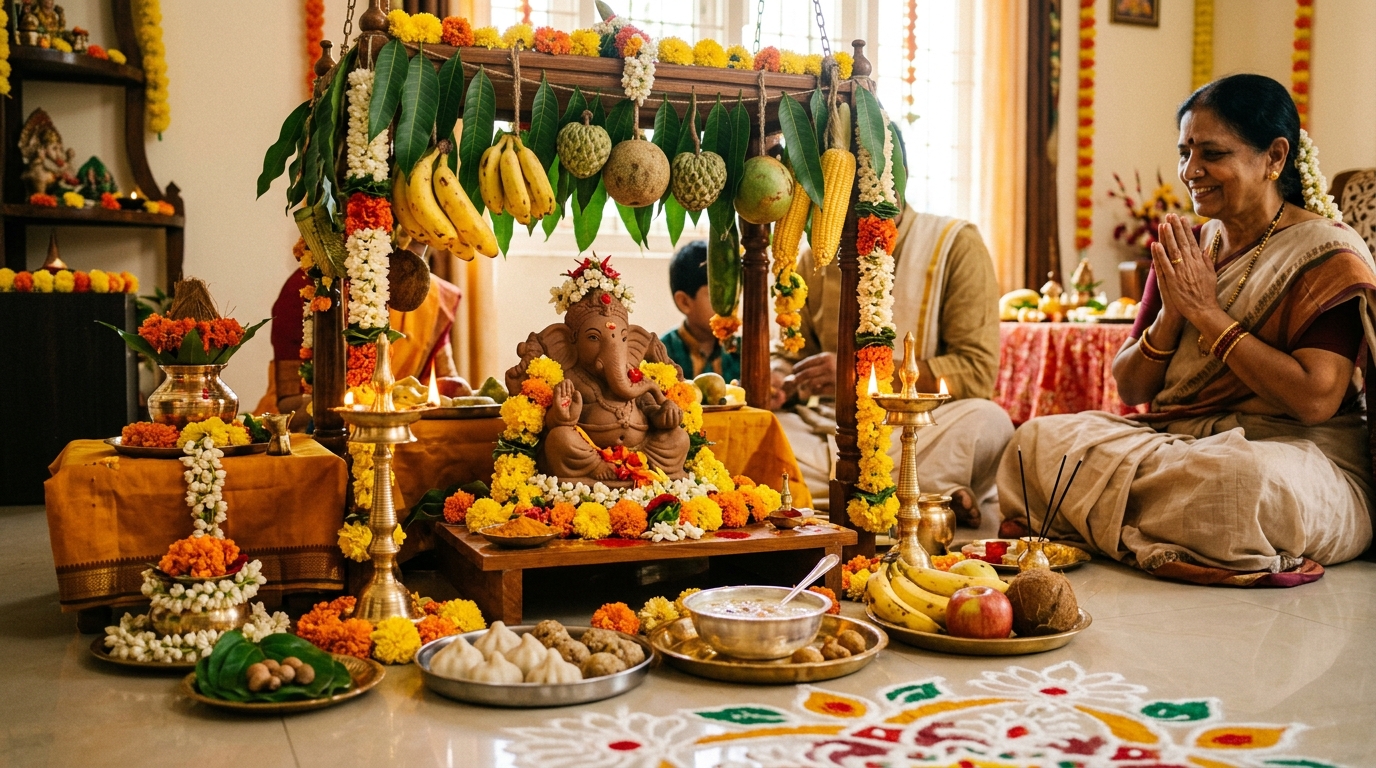
తెలుగు కుటుంబాల్లో వినాయక చవితి భక్తి, సంప్రదాయం, కుటుంబ సమైక్యతతో జరుపుకునే ముఖ్యమైన పండుగ. ఇంట్లో వినాయకుడిని ప్రతిష్ఠించి పూజ, ఏకవింశతి పత్రి సమర్పణ, కుడుములు, ఉండ్రాళ్లు వంటి నైవేద్యాలు సమర్పించి, వినాయక వ్రత కథను వినడం అనేక కుటుంబాల్లో కనిపించే సంప్రదాయాలు.
తెలుగు వినాయక చవితి సంప్రదాయాలు (Traditional Telugu Customs)
Auspicious elements that make Telugu Vinayaka Chavithi vibrant, cultural, and deeply sacred.
1. మట్టి వినాయకుడు
Worshipping an unbaked, pure clay idol fashioned from fertile earth, signifying the origin of creation and natural dissolution.
2. పాలవెల్లి
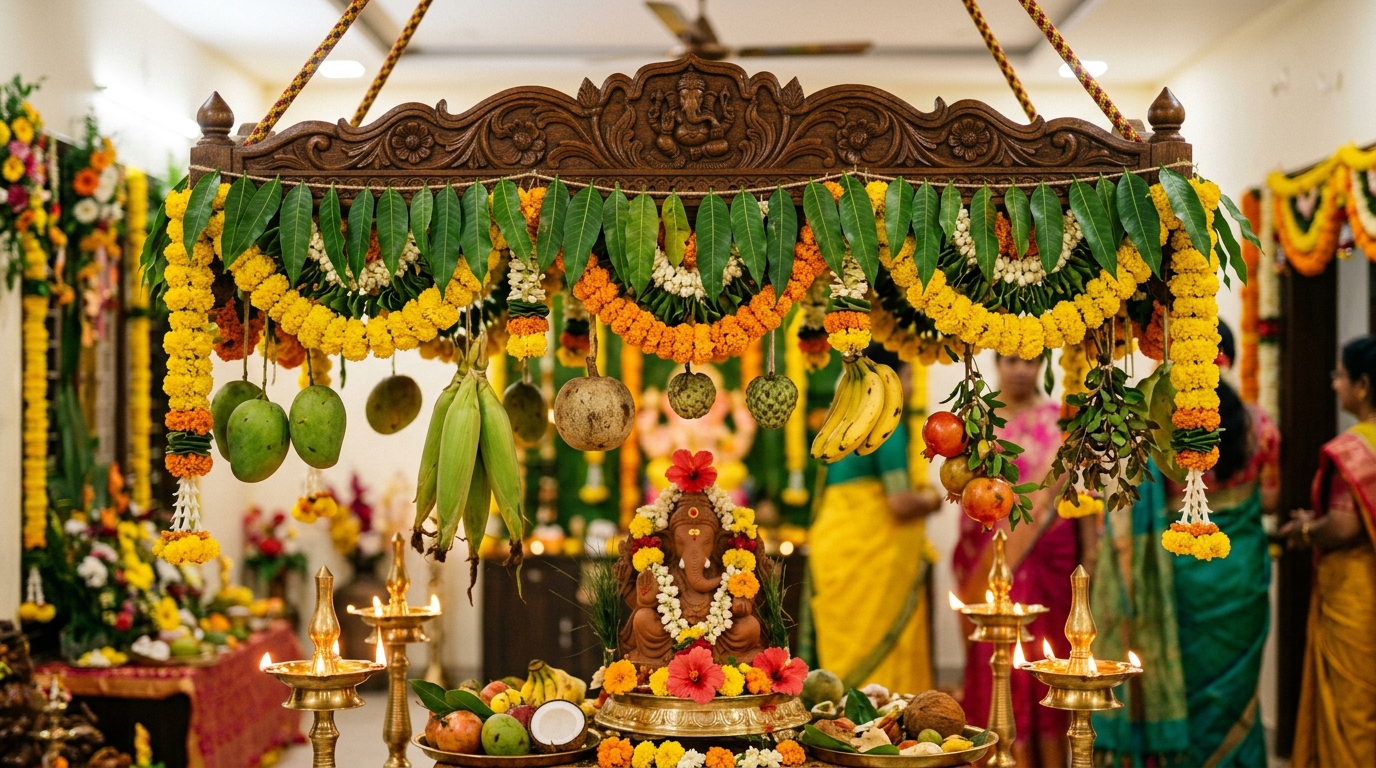
A suspended square wooden canopy adorned with fresh mango leaves, yellow marigolds, corn cobs, and seasonal autumn fruits.
3. ఏకవింశతి పత్రి
Offering 21 distinct medicinal leaves while chanting the sacred names of Lord Sri Ganesha, bringing herbal fragrance into the home.
4. పసుపు గణపతి
Molding a small conical Ganesha using pure turmeric and water on a betel leaf, worshipped as the first obstacle-remover before all rituals.
5. తోరణాలు
Stringing auspicious green mango leaves (Mamidi Akulu) across main doorways and puja altars to invite divine prosperity and positive energy.
6. దీపాలు & పూల అలంకరణ
Illuminating brass deepams with sesame oil or cow ghee, pairing with colorful rice flour muggu (rangoli) and fresh red hibiscus flowers.
పాలవెల్లి — Pala Velli (The Sacred Hanging Canopy)
What is Pala Velli? In Telugu households across Andhra Pradesh and Telangana, the Pala Velli is a quintessential festival centerpiece. It is a square or rectangular wooden trellis suspended directly above the Ganesha mandapam.
- Fresh Mango Leaves (మామిడి ఆకులు): Inverted and tied on all four wooden sides.
- Seasonal Autumn Fruits: Wood apples (వెలగపండు), custard apples (సీతాఫలం), raw bananas (పచ్చి అరటి), pomegranates, and guavas.
- Corn Cobs (మొక్కజొన్న పొత్తులు): Tied with cotton thread to represent abundant agricultural harvest.
- Marigold & Jasmine Garlands: Adorning the perimeter with vibrant festive colors.
మట్టి వినాయకుడు — Traditional Clay Ganesha
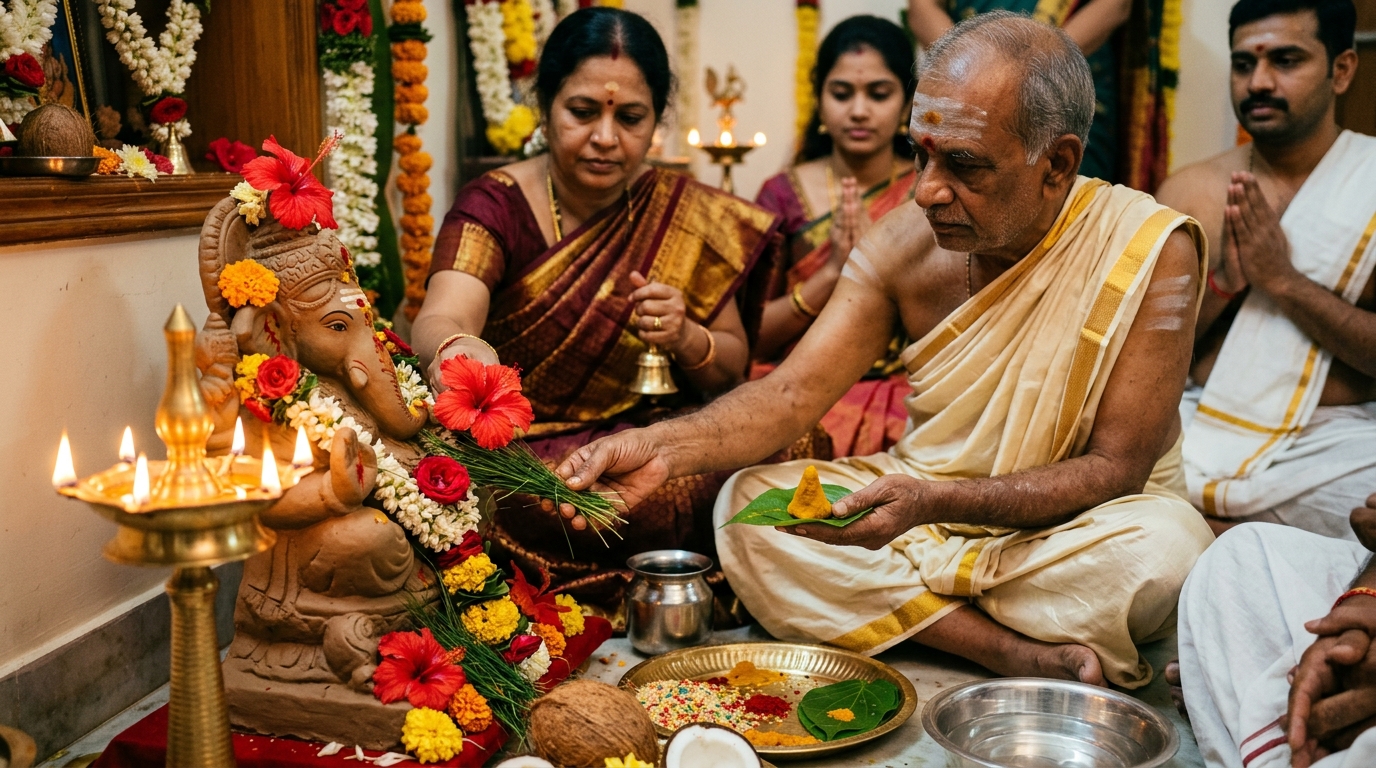
The worship of Matti Vinayakudu (natural unbaked clay Ganesha) is deeply rooted in Vedic and Puranic lore. According to the Skanda Purana and traditional Vratha Katha, Goddess Parvati Devi created Sri Ganesha from the natural clay and turmeric of the earth.
Note: Idol choices and artistic styles vary according to family traditions and local availability.
ఏకవింశతి పత్రి — 21 Sacred Leaves (Preview)
Sacred medicinal foliage offered during Shodashopachara worship
During the puja, each sacred leaf is offered with a designated Ganesha Namavali. Here is a preview of commonly recognized leaves:
ఓం సుముఖాయ నమః
ఓం గణాధిపాయ నమః
ఓం ఉమాపుత్రాయ నమః
ఓం గజాననాయ నమః
ఓం గుహాగ్రజాయ నమః
ఓం ఇభవక్త్రాయ నమః
తెలుగు ఇంటి వినాయక పూజ (Traditional Puja Sequence)
In Telugu homes, Ganesha worship follows an orderly Vedic progression, welcoming Sri Vighneshwara as an esteemed divine guest:
వినాయక చవితి నైవేద్యాలు (Traditional Telugu Naivedyam)
Authentic satvik delicacies offered to Lord Ganesha
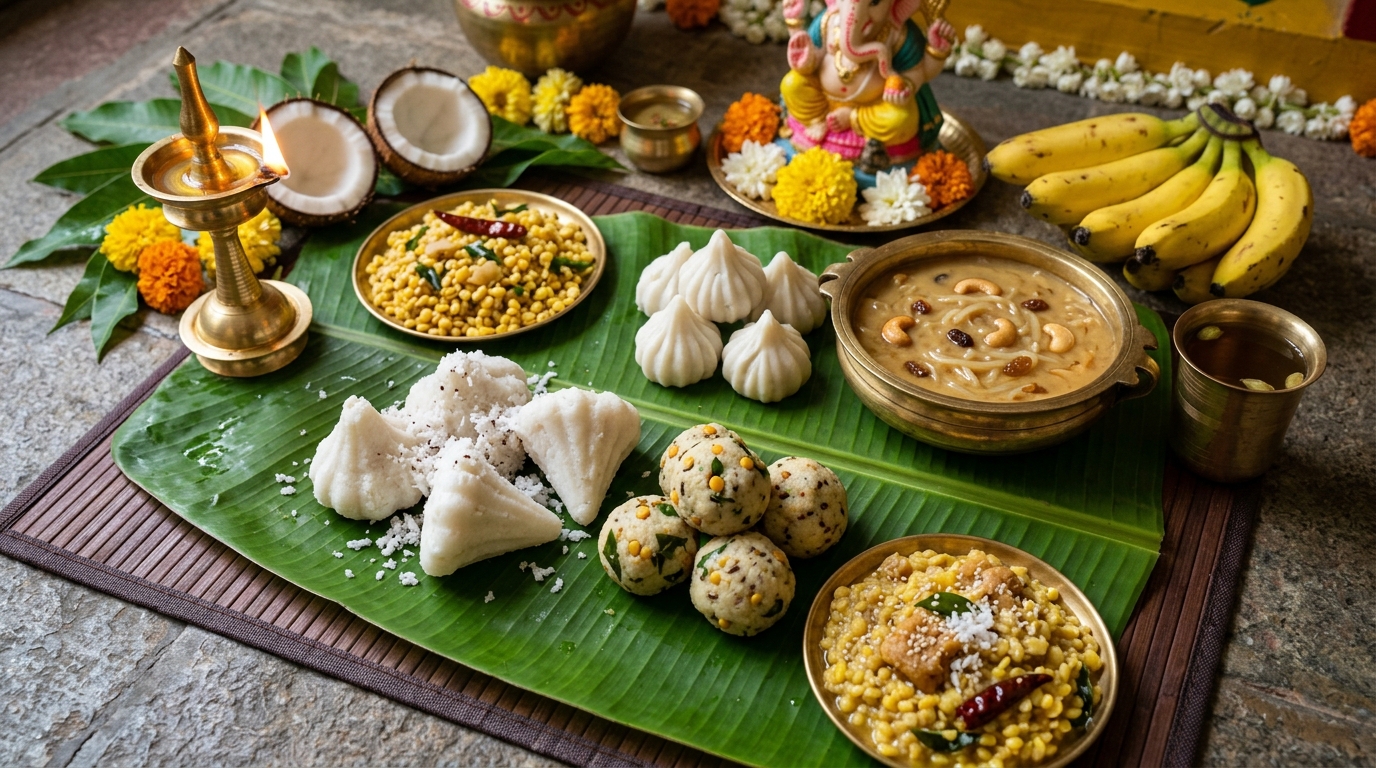
నైవేద్యాల ఎంపిక మరియు తయారీ విధానం కుటుంబం మరియు ప్రాంతీయ సంప్రదాయం ప్రకారం మారవచ్చు. (Naivedyam choices and recipes vary according to regional and family traditions.)
కుడుములు (Kudumulu)
Sweet / SteamedTraditional steamed rice-flour dumplings stuffed with a rich filling of freshly grated coconut, organic jaggery (bellam), and fragrant cardamom.
ఉండ్రాళ్లు (Undrallu)
Savory / SatvikIconic round spherical dumplings prepared from coarse rice rava (biyyam rava) and soaked chana dal, gently tempered with cumin seeds and salt.
Traditional Telugu Vinayaka Chavithi Foods
| Dish | Telugu Name | Common Ingredients | Festival Context |
|---|---|---|---|
| Kudumulu | కుడుములు | Rice flour, coconut, jaggery, cardamom | Primary sweet dumpling offering |
| Undrallu | ఉండ్రాళ్లు | Rice rava, chana dal, cumin, salt, ghee | Signature steamed spherical offering |
| Modak | మోదకం | Rice flour dough, jaggery coconut filling | Steamed or fried sacred sweets |
| Bellam Thalikalu | బెల్లం తాళికలు | Rice flour noodles, milk, jaggery, cardamom | Traditional festival payasam delicacy |
| Panakam & Vadapappu | పానకం & వడపప్పు | Jaggery water with pepper/cardamom, soaked moong dal | Cooling prasad offered after puja |
| Chalividi | చలిమిడి | Uncooked wet rice flour, jaggery, ghee | Auspicious cooling paste offering |
| Seasonal Fruits | పండ్లు & కొబ్బరి | Wood apple, custard apple, bananas, guava, coconut | Fresh autumn harvest offerings |
ఇంట్లో వినాయక చవితి ఎలా జరుపుకోవాలి? (Family Timeline)
-
1
Morning Preparation: Early morning sacred bath, cleaning the home, drawing floor muggu with rice flour.
-
2
Puja Setup: Erecting the Pala Velli canopy, laying out mango leaves, and seating the Matti Vinayakudu.
-
3
Ganesh Pratishtha: Invoking divine presence into the clay idol on the sanctified altar.
-
4
Puja & 21 Patri: Performing Pasupu Ganapathi worship, Shodashopachara, and offering 21 sacred leaves.
-
5
Naivedyam & Vratha Katha: Offering steaming Kudumulu and Undrallu, reading the Syamantaka Mani Vratha Katha.
-
6
Aarti & Prasad: Camphor Mangala Harathi, touching Akshata to head, and sharing delicious feast with family.
-
7
Nimajjanam: Performing Uttarapuja and observing immersion on customary day (1.5, 3, 5, 9, or 11 days).
సామూహిక వినాయక చవితి వేడుకలు (Community Pandals)
Across cities and villages in Andhra Pradesh and Telangana (such as Hyderabad, Vijayawada, Vizag, and Warangal), youth associations and residential welfare groups erect grand pandals.
- Cultural Programs & Bhajans: Daily evening devotional singing, classical dance, and mythological dramas.
- Grand Laddu Auctions: Sacred community laddu auctions (such as Balapur Ganesh Laddu) symbolizing prosperity.
- Annadanam: Free distribution of sanctified meals and prasad to thousands of devotees daily.
- Processions & Immersion: Joyous Shobha Yatras accompanied by traditional dappu drums and bhajans.
తెలుగు భక్తి సంప్రదాయాలు (Devotional Heritage)
Enrich your festival worship with traditional Telugu prayers, slokas, stories, and songs:
వినాయక నిమజ్జనం (Ganesh Nimajjanam)
Before the idol is taken for immersion, Uttarapuja (ఉత్తర పూజ) is conducted with fresh flowers, Aarti, and sweet offerings. Devotees chant farewell prayers, gently moving the idol forward to mark the conclusion of its sanctified stay.
Immersion takes place on customary days (Same day, 1.5-day, 3-day, 5-day, 9-day, or Anant Chaturdashi) at designated municipal artificial tanks, lakes, or home containers.
Vinayaka Chavithi 2026 Festival Date
Bhadrapada Shukla Paksha Chaturthi Tithi. For location-specific Madhyahna Puja Muhurat and Rahukalam in your city:
Check City-Specific Panchang Timings →సంప్రదాయ గమనిక (Tradition Note)
వినాయక చవితి ఆచారాలు ప్రాంతం, కుటుంబ సంప్రదాయం, దేవాలయ పద్ధతి మరియు స్థానిక ఆచారాల ప్రకారం మారవచ్చు. ఈ పేజీ సాధారణ సాంస్కృతిక మార్గదర్శకంగా రూపొందించబడింది.